
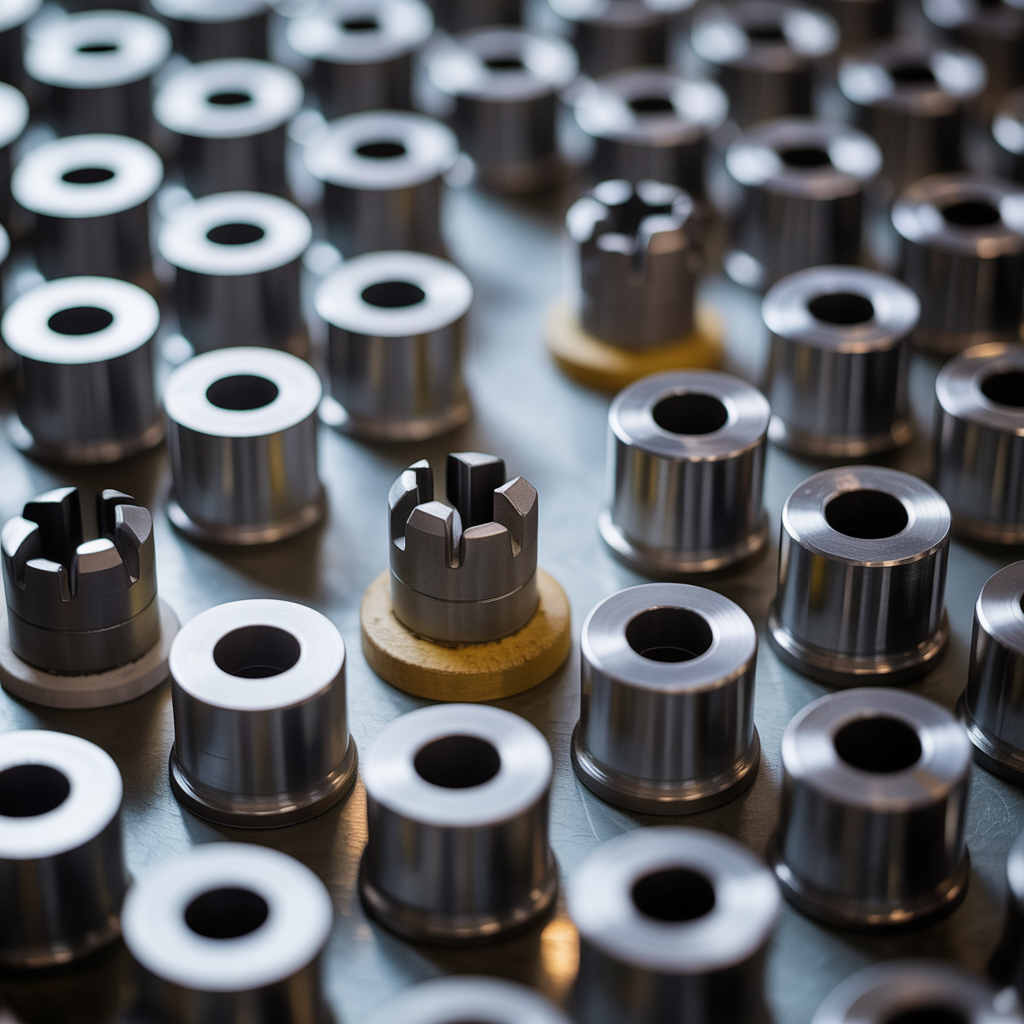
One of the most frequently asked questions in tablet manufacturing is: how long will my dies and punches last before they need replacement? The answer depends on several factors — your formulation, press speed, tooling material, and maintenance practices.
Expected Tooling Lifespan by Material
| Material | Standard Formulation | Abrasive Formulation | With TiN Coating |
|---|---|---|---|
| EMMKAY Special Steel | 5—10 million tablets | 3—6 million tablets | 7—14 million tablets |
| OHNS | 3—5 million tablets | 1—2 million tablets | 4—7 million tablets |
| HCHC / D3 | 5—8 million tablets | 3—5 million tablets | 7—12 million tablets |
| S7 | 3—6 million tablets | 2—4 million tablets | 4—8 million tablets |
With coatings, add 30—50% to these numbers. TiN coating extends life by 30—50% for abrasive formulations. DLC coating extends life by 20—40% and reduces sticking-related wear. Chrome plating extends life by 15—25%.
Important: These are approximate ranges. Your actual results will vary based on the specific factors described below.
Factors That Affect Tooling Life
- Formulation abrasiveness — The most significant factor. Formulations containing calcium carbonate, dicalcium phosphate, iron oxide, or mineral fillers wear tooling much faster than formulations based on lactose, microcrystalline cellulose, or starch.
- Press speed (RPM) — Higher press speed means more compression cycles per hour and faster wear. A press running at 60 RPM wears tooling roughly twice as fast as one running at 30 RPM.
- Compression force — Higher compression force accelerates tip wear and head wear. Formulations requiring high compression force wear tooling faster.
- Tablet size — Larger tablets require more compression force and create more stress on the tooling.
- Maintenance quality — Properly cleaned, lubricated, and stored tooling lasts 2—3x longer than neglected tooling. See our maintenance guide.
- Press condition — A well-maintained press with aligned turret bores and smooth compression rollers extends tooling life. A poorly maintained press causes uneven wear and premature failure.
Signs That Tooling Needs Replacement
Replace immediately: Visible chips or cracks on punch tips, scored or scratched die bores, bent punch barrels, broken or cracked punch heads.
Replace soon: Tablet weight variation exceeding specification, increasing tablet hardness variation, tablet sticking increasing despite proper formulation, embossing becoming shallow or unclear, die bore diameter exceeding tolerance by more than 0.03mm.
Monitor closely: Tablet surface finish deteriorating, compression force increasing for the same tablet hardness, slight increase in tablet weight variation.
How to Extend Tooling Life
- Choose the right material: Match the material to your formulation. Using OHNS for a highly abrasive calcium formulation wastes money — HCHC will last 2—3x longer and cost only 20—30% more per set.
- Use appropriate coatings: TiN for abrasive formulations, DLC for sticky formulations. See our coatings guide.
- Maintain properly: Clean, inspect, lubricate, and store tooling after every production run. This single practice can double tooling life.
- Optimize press settings: Use the minimum compression force needed to achieve target hardness.
- Rotate tooling sets: If you run the same product frequently, rotate between 2—3 tooling sets. This gives each set time to rest and allows for thorough cleaning and inspection.
Conclusion
Tablet dies and punches typically last 3—10 million tablets depending on material, formulation, and maintenance. The most effective ways to extend tooling life are: choosing the right material for your formulation, using appropriate coatings, and maintaining a consistent cleaning and storage routine.
EMMKAY INDUSTRIES manufactures tablet dies and punches in all material grades and coatings. Contact us to discuss the most cost-effective tooling solution for your specific production requirements.