
Selecting the correct tablet size is one of the first decisions in tablet tooling. The tablet diameter, thickness, and weight determine which tooling standard you need, what punch tip profile to use, and how many tablets you can produce per batch.
Round Tablet Sizes
| Diameter | Approx. Weight | Typical Application | Tooling |
|---|---|---|---|
| 3mm | 15–30mg | Micro-dose, homeopathic | B or BB |
| 4mm | 30–60mg | Small-dose pharmaceutical | B or BB |
| 5mm | 50–100mg | Standard pharmaceutical | B or BB |
| 6mm | 80–150mg | Common pharmaceutical | B or BB |
| 7mm | 100–200mg | Pharmaceutical and nutraceutical | B |
| 8mm | 150–300mg | Very common pharmaceutical | B |
| 9mm | 200–400mg | Pharmaceutical and nutraceutical | B or BB |
| 10mm | 300–500mg | Common nutraceutical | B |
| 11mm | 350–600mg | Nutraceutical and ayurvedic | B or D |
| 12mm | 400–700mg | Nutraceutical and ayurvedic | B or D |
| 13mm | 500–900mg | Large pharmaceutical and nutraceutical | B or D |
| 15mm | 700–1200mg | Large nutraceutical and veterinary | B or D |
| 18mm | 1000–1800mg | Veterinary and large nutraceutical | D |
| 20mm | 1200–2500mg | Veterinary boluses | D |
| 25mm | 2000–5000mg | Large veterinary boluses | D |
Weight ranges are approximate and depend on formulation density, cup depth, and compression force.
Capsule Shape Tablet Sizes
| Size (L x W) | Approx. Weight | Application | Tooling |
|---|---|---|---|
| 8mm x 4mm | 100–200mg | Small pharmaceutical | BB |
| 10mm x 5mm | 150–300mg | Pharmaceutical | BB / B |
| 12mm x 6mm | 250–450mg | Common pharmaceutical | B |
| 14mm x 7mm | 350–600mg | Pharmaceutical and nutraceutical | B / D |
| 16mm x 8mm | 500–800mg | Nutraceutical | B / D |
| 18mm x 9mm | 600–1000mg | Large nutraceutical | B / D |
| 20mm x 10mm | 800–1400mg | Large nutraceutical | D |
| 22mm x 11mm | 1000–1800mg | Large nutraceutical and veterinary | D |
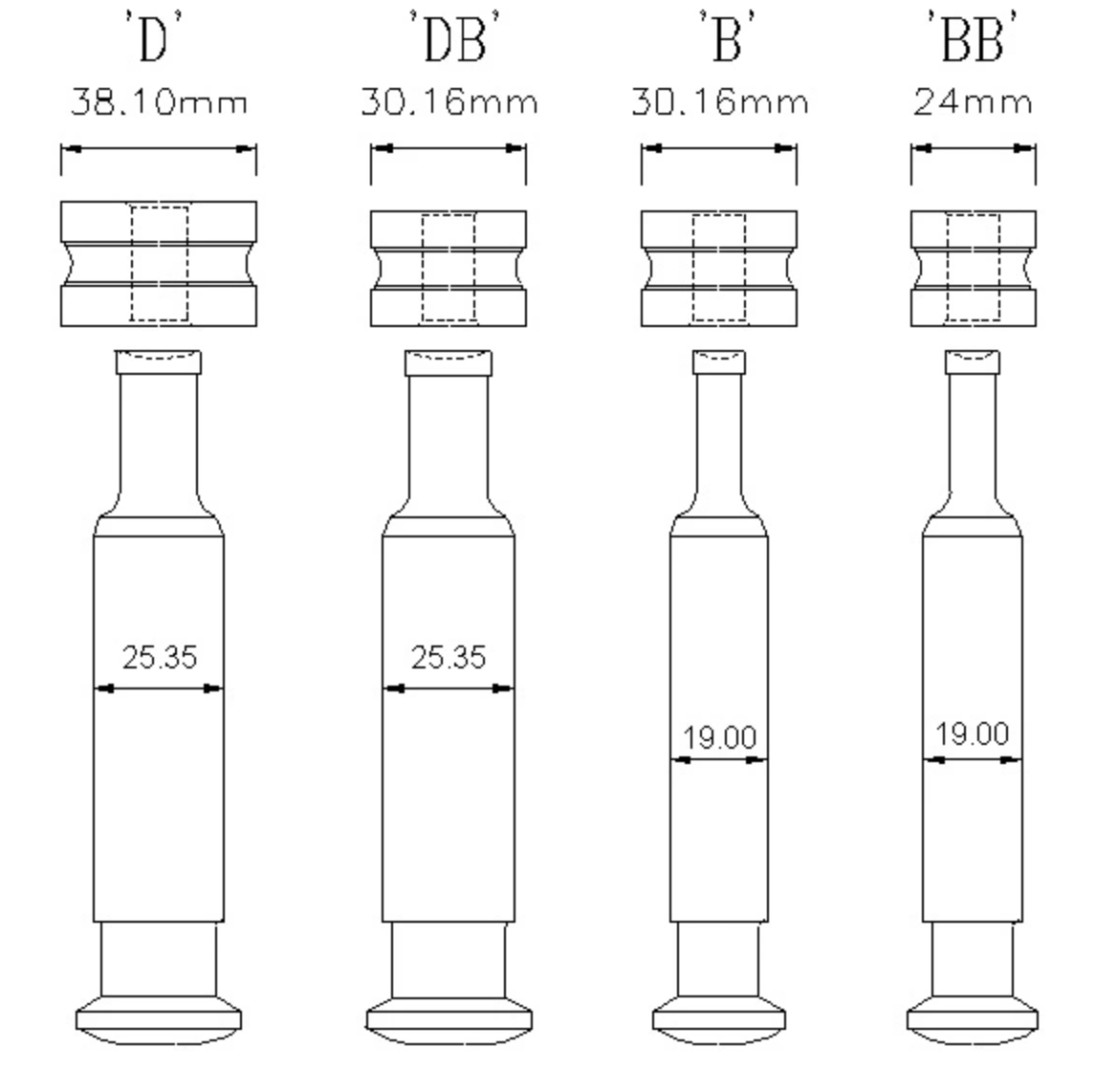
Tooling Standard Selection by Tablet Size
D Tooling
- ·Die OD: 38.10mm (1.5")
- ·Max tablet: 25mm
- ·Punch barrel: 25.4mm
- ·Most common standard worldwide
B Tooling
- ·Die OD: 30.16mm (1.1875")
- ·Max tablet: 18.5mm
- ·Punch barrel: 19.0mm
- ·Veterinary, effervescent, large nutraceuticals
BB Tooling
- ·Die OD: 24mm (0.945")
- ·Max tablet: 18.5mm
- ·Punch barrel: 19.0mm
- ·Compact presses, more stations per turret
DB Tooling
- ·Die OD: 30.16mm (B-size die)
- ·Max tablet: 25mm (D-size range)
- ·Punch barrel: 25.4mm (D-size punch)
- ·B-press with D-size tablet capacity
Punch Tip Profiles and Cup Depth
| Profile | Cup Depth | Best For |
|---|---|---|
| Flat-faced (FF) | 0mm | Scoring, embossing, uncoated tablets |
| Flat-faced beveled edge (FFBE) | 0mm + bevel | Reduced chipping during coating |
| Shallow concave (SC) | 0.5–1.5mm | Standard coated pharmaceutical tablets |
| Standard concave (StdC) | 1.5–3.0mm | General-purpose tablets |
| Deep concave (DC) | 3.0–5.0mm | Thick film-coated tablets |
| Compound cup | Variable | Branded tablets and special profiles |
Tablet Thickness — What Controls It?
Tablet thickness depends on two factors: the punch tip curvature (cup depth) and the compression settings on your rotary tablet press. The curvature of the upper and lower punch tips directly adds to the tablet's overall thickness — a deeper concave profile produces a thicker tablet even at the same band thickness. The press settings (lower punch position and compression force) then determine the band thickness by controlling fill depth and compaction.
In other words: tooling geometry sets the minimum possible thickness (determined by cup depth), while the press settings control how much additional band thickness is added on top of that.
How to Adjust Tablet Thickness
- ·Change curvature (tooling): A deeper cup depth increases overall tablet thickness — see the profile table above
- ·Increase thickness (press): Raise the fill cam (lower punch drops further, more powder enters the die)
- ·Decrease thickness (press): Lower the fill cam or increase compression force
- ·Maintain consistency: Ensure uniform powder flow and consistent lower punch positions across all stations
Tablet thickness variation between stations is a common sign of worn lower punches or inconsistent punch lengths. If your tablets show thickness variation beyond ±0.1mm, inspect your tooling condition and check punch length uniformity. See our guide on tablet defects caused by worn tooling for troubleshooting.
Multi-Tip Sizing Considerations
D Tooling (25.4mm barrel)
- ·3–4mm tablets — 5 to 7 tips per station
- ·5–6mm tablets — 3 to 4 tips per station
- ·7–8mm tablets — 2 to 3 tips per station
- ·9–10mm tablets — 2 tips per station
- ·11mm+ tablets — single tip only
B Tooling (19.0mm barrel)
- ·3–4mm tablets — 4+ tips per station
- ·5–6mm tablets — 2 to 3 tips per station
- ·7–8mm tablets — 2 tips per station
- ·9mm+ tablets — single tip only
Smaller tablets benefit most from multi-tip tooling — a 3mm tablet with 7 tips produces 7 tablets per press cycle per station.
Need Help Selecting?
Our engineers will help you choose the right tooling for your tablet size and press.
Contact Us WhatsApp →